


Cleaning Desert Dust from Area Rugs: A St. George Homeowner Guide
Learn how fine red soil and desert dust affect area rugs in St. George homes, along with practical maintenance steps to prevent fiber wear and keep rugs fresh.

Living in St. George and across Southern Utah offers sweeping red rock scenery, mild winters, and abundant sunshine. Along with this desert environment, however, comes an ongoing household challenge: fine mineral dust and windblown sand. When it comes to cleaning desert dust from area rugs, homeowners quickly discover that standard cleaning routines often fall short. Desert soil is exceptionally fine, settling deep into rug foundations where it quietly causes progressive fiber wear.
Area rugs add warmth, comfort, and artistic character to tile and hardwood floors throughout our desert communities. Whether you enjoy an authentic Persian rug, a hand-knotted wool runner, or a flatweave accent, protecting these textiles requires understanding how desert minerals interact with woven fibers. A practical maintenance routine keeps floor coverings looking fresh while preserving their structural integrity for years to come.
To care for area rugs effectively in Southern Utah, it helps to understand what makes desert soil distinct. The dust that drifts across Washington County consists largely of pulverized sandstone, quartz, feldspar, and fine mineral silt. Under magnification, these tiny particles are not soft; they are jagged crystals with sharp mineral edges.
When wind, pets, or footwear bring this fine grit indoors, it settles across your rug. Over time, gravity and regular foot traffic sift these microscopic particles past the surface pile down into the foundation yarns—the warp and weft holding the rug together. Once embedded at the base, every step taken across the rug causes these sharp crystals to grind against delicate wool, cotton, or silk fibers like microscopic sandpaper.
Over time, this abrasive action shears fibers near their roots. Homeowners often notice pile thinning, dulling of rich colors, or fiber shedding that vacuuming cannot fix. The rug is not simply wearing down from surface footsteps; it is being slowly abraded from within by trapped mineral grit.
When homeowners notice fine dust dulling their rugs, their natural reaction is to reach for familiar cleaning tools. Unfortunately, several conventional methods can accelerate fiber damage when dealing with fine desert dust.
One frequent mistake is using an aggressive rotating vacuum beater bar. While beater bars agitate synthetic carpeting effectively, their stiff bristles pull, fray, and snap natural wool fibers. If a rotating brush catches delicate fringe along the end of an Oriental or flatweave rug, it can unravel foundation threads in seconds.
Another common misconception is that outdoor rug beating is the best way to dislodge deep dust. While gently shaking a small rug outside helps remove loose surface debris, hanging an area rug over a railing and beating it vigorously with a broom can snap dry foundation yarns. In our arid desert climate, natural fibers lose elasticity over time, making forceful impacts hazardous to handwoven textiles.
Perhaps the most damaging shortcut is applying water, steam, or liquid carpet shampoo to a rug that still contains dry mineral dust. When fine desert silt encounters moisture, it instantly turns into dense mud. Household carpet wands cannot extract thick sludge through dense rug foundations. Instead, the mud gets pressed deeper, where it hardens, creating a stiff backing, musty odors, and stubborn water rings.
Safe rug maintenance in Southern Utah relies on removing dry soil before it settles deep or contacts moisture. Incorporating a few gentle habits into your housekeeping routine will dramatically reduce dust buildup.
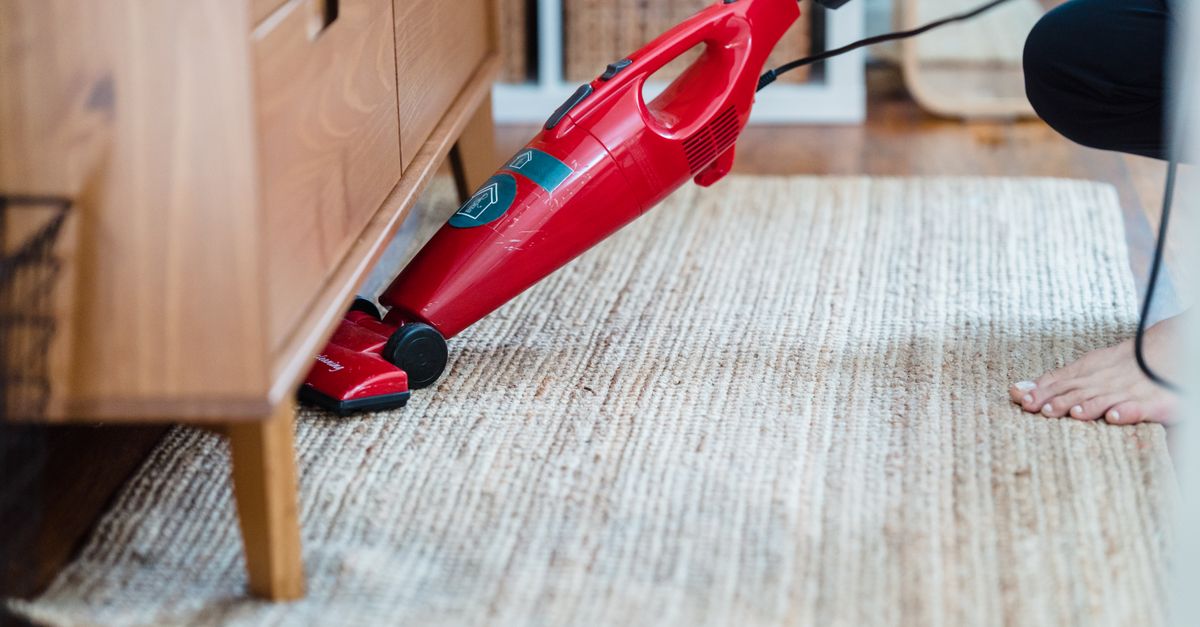
The foundation of good rug care in an arid environment is frequent, gentle vacuuming. For natural-fiber and handwoven area rugs, always disengage the rotating brush roll or use a floor wand attachment that relies purely on suction. Vacuum high-traffic runners and living room rugs once or twice weekly in slow, overlapping strokes. Slow passes give airflow time to lift fine sand particles from between pile fibers without pulling at the yarn.
Always vacuum in the direction of the rug pile rather than pushing against it. To protect fringe, keep the vacuum head several inches away from the ends, vacuuming across the width of the rug rather than toward the tassels.
Because surface vacuuming only pulls soil from the top of the pile, fine mineral grit often stays locked near the backing. A safe method homeowners can perform on sturdy wool rugs with cotton foundations is the back-side vacuuming technique.
Once or twice a year, turn your area rug face down directly onto a clean, hard floor. Turn on your vacuum's brush roll and gently run it over the back of the rug only. The mechanical vibration against the backing loosens stubborn sand particles, allowing them to drop out of the pile onto the floor underneath. Once finished, roll the rug back, sweep up the fine desert sand, and vacuum the face using suction only. Avoid this technique on fragile antique rugs or silk pieces without professional guidance.
Prevention is just as critical as cleaning when managing desert soil. Establishing a double-mat system at exterior entryways prevents outdoor grit from reaching decorative rugs. Place an abrasive scraper mat outside your exterior doors to knock coarse sand from shoe treads, paired with an absorbent runner immediately inside the doorway.
Encouraging family members and guests to remove outdoor footwear at the door provides unmatched protection for indoor textiles. If you have pets who explore outdoors, wiping dusty paws with a damp microfiber towel before they enter stops red dirt in its tracks.
A rug pad acts as both a shock absorber and a protective barrier against abrasive soil. In desert homes with hard flooring, walking on a rug without a pad presses embedded grit directly against your floor finish while accelerating fiber shearing on the underside of the rug.
For homes in St. George, choose a dense, dual-surface felt pad with a natural rubber backing. Avoid cheap, open-grid synthetic waffle pads. Over time, Southern Utah heat and dry indoor air cause thin synthetic pads to dry out, crumble, and stick to hardwood or tile. A solid, breathable felt pad cushions each step and traps dust safely away from your flooring.
To keep your rugs in peak condition throughout the year, steer clear of these frequent pitfalls:
Even with meticulous home vacuuming, fine desert dust inevitably works its way into the deepest foundation layers of an area rug over time. Every one to three years—depending on foot traffic, children, and pets—valuable area rugs require comprehensive professional care.
Professional facility cleaning differs fundamentally from in-home carpet cleaning. A dedicated rug care studio begins by placing the rug in specialized dry soil dusting equipment. Using harmonic vibration and gentle compressed air, this machinery removes pounds of dry, compacted sand and mineral silt that household vacuums cannot dislodge—all before liquid touches the fibers.
Once completely dusted, rugs receive customized immersion washing tailored to their specific fiber type, dye stability, and weave construction. Thorough rinsing flushes away all remaining soil and cleaning residues, followed by temperature- and humidity-controlled drying. This specialized process restores color vibrancy, softens the pile, and ensures foundation yarns remain strong and pliable.
Southern Utah's desert environment is part of what makes living here so rewarding, and with the right care principles, your area rugs can thrive in our arid climate. By keeping fine sand at bay with proper entry mats, vacuuming regularly with suction-only tools, and protecting your rugs with quality felt padding, you prevent abrasive dust from diminishing your home's most beautiful textiles.
When routine maintenance is no longer enough to remove deep, embedded grit, professional care provides the safe, thorough reset your floor coverings need. If your area rugs feel gritty underfoot, look muted, or have not had a deep dry soil extraction in over a year, St George Rug Cleaning is here to help. Our facility-based dusting and washing processes are specifically designed to safely remove Southern Utah's stubborn desert soil, preserving the comfort, beauty, and value of your rugs for years to come.